Built for the teams that need structure most.
Small FRC teams. FTC teams. Rebuilding programs. Teams with one mentor and not enough hours. PitCrew is mentor-assist, not mentor replacement — the AI drafts, your team decides.
Everyone gets something different out of it.
Program-level visibility.
See every subsystem, every deadline, and every student's workload from one dashboard — without chasing updates in five different group chats.
- Bulk-invite a whole roster in one step
- Documentation that's ready when judges ask for it
- A process that survives roster turnover season to season
Decision support, not repetition.
Stop re-explaining the same wiring rule or rulebook citation to the third student who asks this week. Let Commander handle the first pass; spend your time on the judgment calls that actually need a human.
- Specialist-level answers, available any time you're not
- You still review, approve, and teach — nothing ships unreviewed
- More time for the parts of mentoring only a person can do
Real ownership, real understanding.
The AI drafts a design or a piece of code — you decide whether it's right, why it works, and what to do if it doesn't. That decision is still yours.
- Ask Commander anything, any time, without judgment
- A notebook entry that writes itself into something worth reading
- Structure without a mentor standing over your shoulder
PitCrew's agents can draft a mechanism, a block of code, or a first pass at a strategy — but they can't turn a wrench, and they don't make the final call. Every design, every line of code, and every decision still has to be understood and owned by a student. That's not a limitation we're working around; it's the whole point of a student program.
From Kickoff Day to a shared plan the whole team can see.
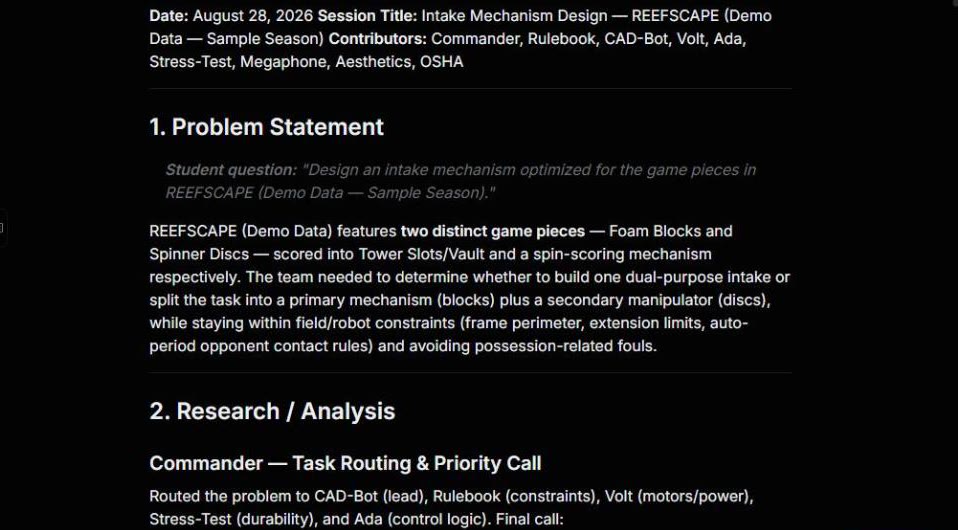
Documentation that keeps up with the season.
Commander sessions can create dated engineering-notebook entries that preserve the question, specialists consulted, and recommendations for the team to review.
- MoSCoW Board keeps priorities visible to the whole team
- Prototype and CAD requests trace back to the original decision
- A running record your team can build on through competition prep — not assembled the night before
The same structure, at the event.
Ready for the pit, not just the shop.
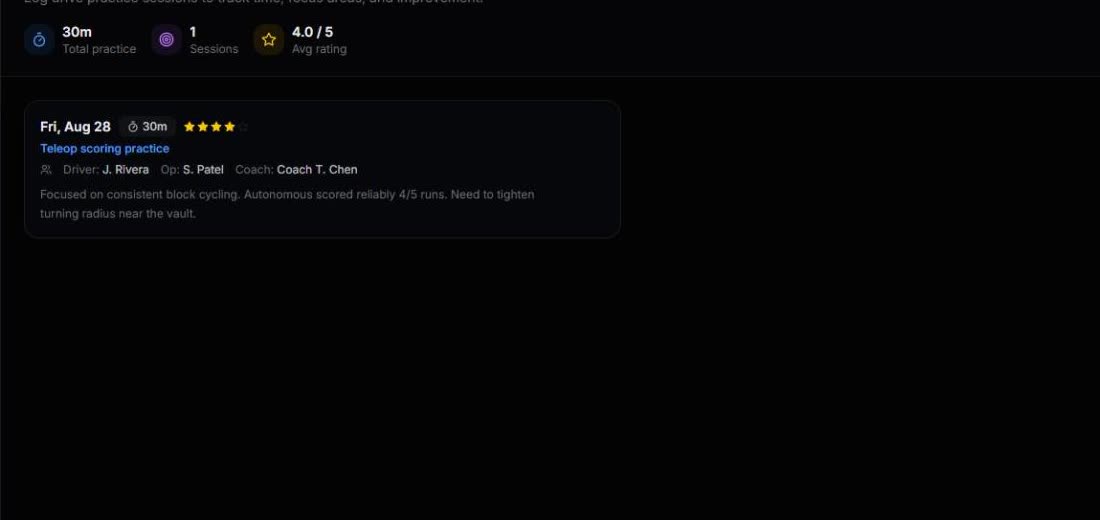
A Pit Checklist that's actually been used all season, and a Driver Practice log that shows real improvement — not a scramble the morning of your event.
- Hardware, software, and safety checks in one list
- Every practice session logged — focus area, duration, self-rating
- Drive team walks in with data, not just instinct
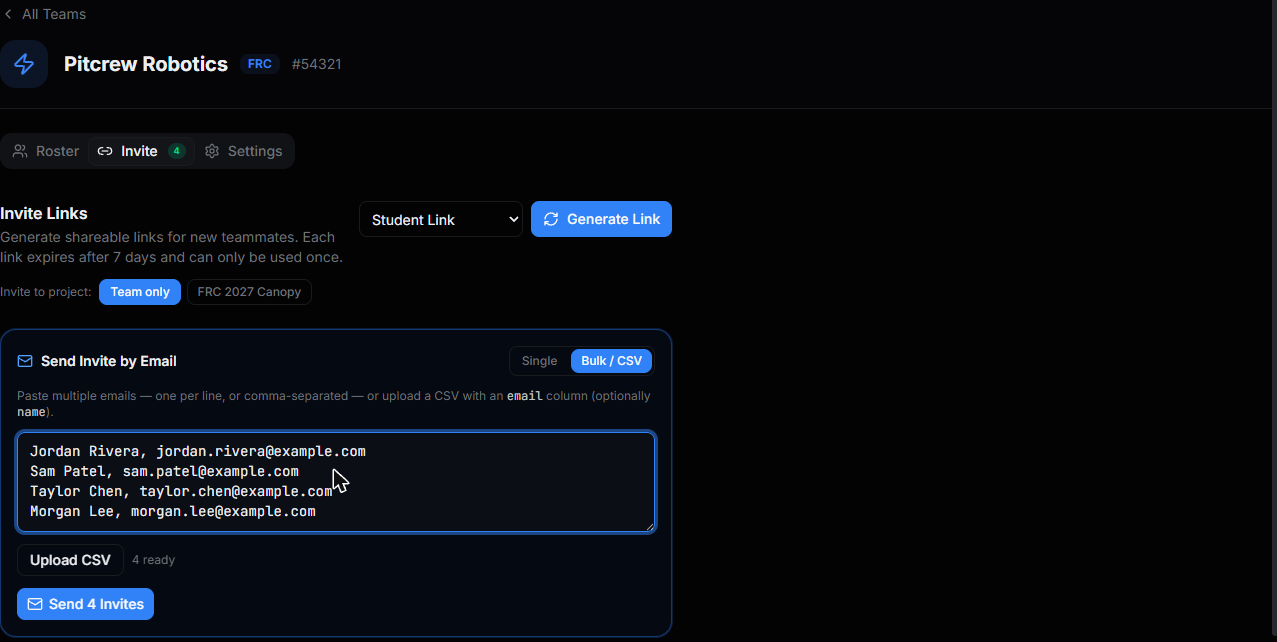
Onboarding a whole roster shouldn't take an afternoon.
Paste your team's names and emails, or upload a CSV, and every student gets an invite — not one link copy-pasted twenty times into a group chat.
Whatever role you're in, start the same way.
Run a Kickoff session, invite your team, and let PitCrew carry the plan through the season.